Skagway: Stepping Back into the Yukon Gold Rush
There are few places in North America where history feels as immediate—almost theatrical—as it does in Skagway, Alaska. Tucked at the northern end of the Inside Passage, this small port town offers something rare: not merely a preserved past, but a lived-in echo of one of the most dramatic human migrations in modern history—the Klondike Gold Rush of 1897–1899. To walk down Skagway’s wooden boardwalks today is to step into a frontier drama shaped by ambition, hardship, and the relentless pull of gold.
A Gateway to Dreams—and Desperation
Skagway’s story is inseparable from the frenzy that followed the discovery of gold in the Klondike region of Canada’s Yukon Territory. News of the strike spread quickly, igniting what newspapers dubbed a “stampede” of fortune seekers. Tens of thousands of prospectors—many from Seattle and San Francisco—flooded north, and Skagway became one of their primary entry points.
At the heart of this migration was the infamous White Pass, a rugged mountain route that quickly earned the nickname “Dead Horse Trail” due to the thousands of pack animals that perished along its steep and unforgiving path. From Skagway, stampeders hauled a year’s worth of supplies—nearly a ton per person—over icy terrain in hopes of reaching the goldfields of Dawson City.
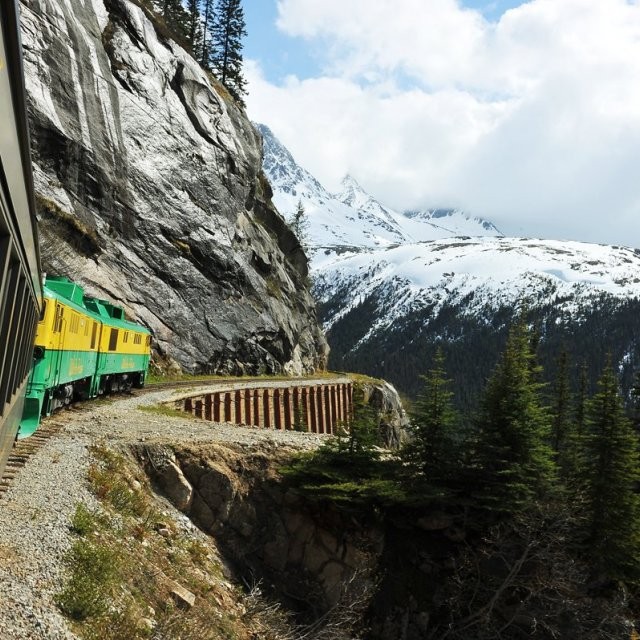
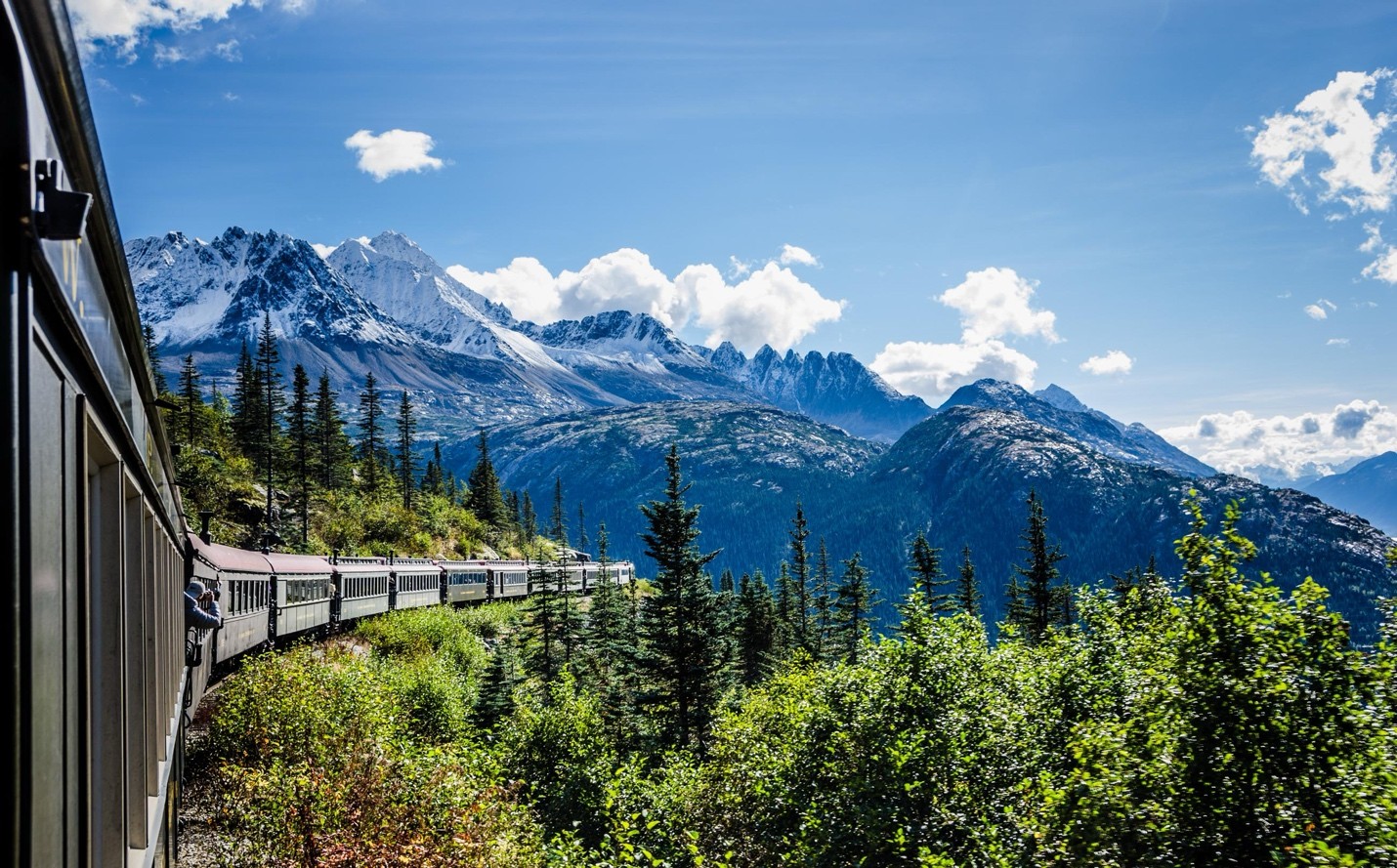
Today, that same route is immortalized by the White Pass and Yukon Route Railroad, a narrow-gauge railway that winds through cliffs, glaciers, and alpine passes. Originally completed in 1900, the railway stands as both an engineering marvel and a testament to the determination—and desperation—of those who chased gold into the wilderness.
Broadway: A Street Frozen in Time
The heart of Skagway is Broadway Street, a remarkably intact corridor of false-fronted buildings that once catered to miners, gamblers, and opportunists of every stripe. Walking here feels less like visiting a museum and more like inhabiting a carefully preserved moment.
Much of this historic district is protected within the Klondike Gold Rush National Historical Park, where restored buildings house exhibits that vividly recount the human stories behind the gold rush. Hotels, saloons, and supply stores still stand much as they did over a century ago, their weathered facades whispering of long-gone fortunes and fleeting dreams.
Among the most infamous figures of the era was Soapy Smith, a charismatic conman who effectively ruled Skagway’s underworld. His story—equal parts legend and cautionary tale—captures the lawlessness that defined the town during its boom years. In Skagway, history is not sanitized; it is textured, colorful, and occasionally unruly.
The Illusion—and Reality—of Preservation
What makes Skagway particularly compelling is the delicate balance it maintains between authenticity and tourism. Unlike many historic towns that feel reconstructed or overly curated, Skagway retains a sense of continuity. The buildings are original. The street grid is unchanged. Even the scale of the town—compact, walkable, intimate—mirrors its gold rush origins.
Yet this preservation is not accidental. It reflects decades of careful stewardship, particularly by the National Park Service, which has worked to conserve both the physical structures and the narratives they embody. Visitors can step into restored interiors, watch reenactments, or simply sit on a wooden bench and imagine the swirl of languages, ambitions, and anxieties that once filled the air.
A Landscape That Shapes History
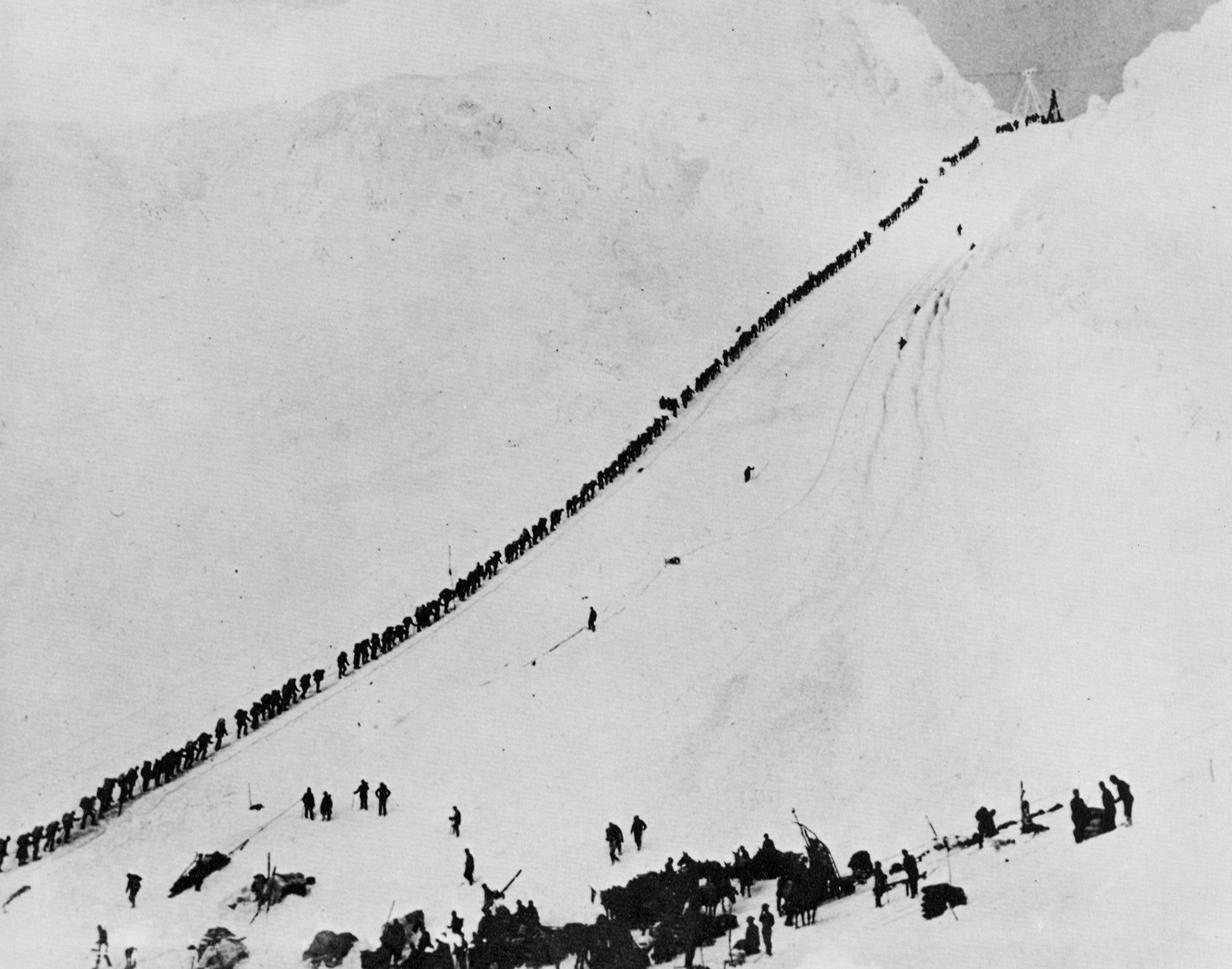
Prospectors on the Chilkoot Trail during the Klondike Gold Rush.
Skagway’s historical power is inseparable from its geography. Hemmed in by steep mountains and deep fjords, the town feels like a threshold—a liminal space between civilization and wilderness. The surrounding landscape is not merely scenic; it is a protagonist in the story.
The nearby Chilkoot Trail, another key route to the Klondike, remains one of the most evocative historic trails in North America. Modern hikers retrace the steps of gold seekers, climbing the same icy passes and carrying echoes of the same hopes and hardships. The terrain reminds visitors that the gold rush was not just an economic event—it was a physical ordeal that tested endurance, resilience, and often survival itself.
Echoes That Endure
To describe Skagway as a place “frozen in time” is only partly accurate. It is more precise to say that time here is layered. The present—cruise ships, cafés, and guided tours—coexists with a vivid, accessible past. The effect is immersive rather than nostalgic.
For visitors, especially those arriving by ship along Alaska’s Inside Passage, Skagway offers something uniquely powerful: a chance to engage with history not as abstraction, but as environment. The creak of wooden sidewalks, the sharp scent of mountain air, the sight of narrow streets framed by towering peaks—all combine to create an experience that is both sensory and intellectual.
A Living Frontier
Skagway endures because it tells a story that still resonates. The Yukon Gold Rush was, at its core, a story of human aspiration—the desire to transform one’s fate, to risk everything for the promise of something greater. That story is etched into every building, every trail, and every mountain pass surrounding the town.
To visit Skagway is to encounter that story in its most tangible form. It is not simply a destination; it is a threshold into a defining chapter of North American history—one that continues to echo in the ambitions, journeys, and landscapes of today.
And in that sense, Skagway is not just a step back in time—it is a reminder that the frontier, in all its complexity, is never entirely behind us.
This content was originally published on deckchairnaturalist.com and is copyrighted material. If you are reading this on another website it is being published without consent.