The Wildlife Celebrities Every Cruise Passenger Secretly Wants to See
There is an unspoken truth aboard every Alaska cruise ship. Passengers may claim they are sailing north for glaciers, culture, scenery, or “the educational enrichment opportunities,” but somewhere between Seattle and the Inside Passage, a primal instinct takes over.
People want animals. Not just any animals, either. Nobody races to the railing shouting, “Quick! A gull!” Cruise passengers want Alaska’s wildlife superstars—the furry, feathered, and fishy celebrities collectively known as Alaska’s “Big Five.”
Like safari-goers
scanning the Serengeti for lions and elephants, Alaska cruise travelers spend much of their voyage clutching binoculars, scanning the horizon, and dramatically pointing at floating logs that may—or may not—be sea otters.
These five creatures dominate the wildlife wish list of nearly every Alaska visitor. Some are enormous. Some are adorable. Some smell faintly of salmon and bad decisions. All are unforgettable.
1. Humpback Whales: The Rock Stars of the Inside Passage
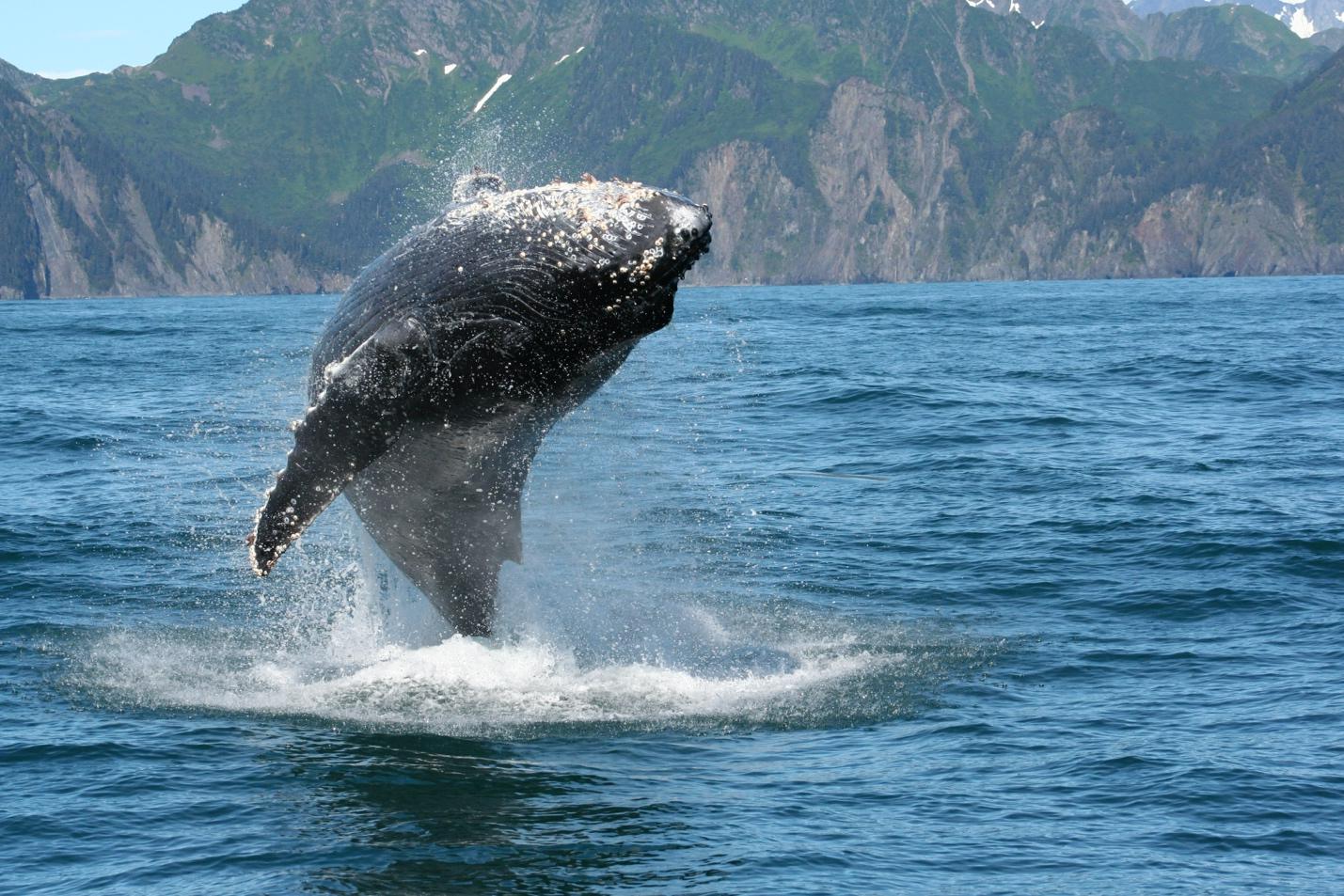
Juvenile Humpback Whales, Resurrection Bay, Seward, AK. Photo by Ann Burg
No creature generates more excitement aboard an Alaska cruise than the humpback whale.
The moment someone spots a spout, chaos erupts. Coffee is abandoned. Deck chairs are vacated at dangerous speed. Entire buffet lines are temporarily forgotten. Even the people who insisted they “don’t really care about wildlife” suddenly become marine biologists.
Humpbacks are Alaska’s great show-offs. They breach, tail slap, and bubble-net feed with the confidence of performers who know they are the headline act.
Bubble-net feeding is particularly astonishing. Groups of whales work together to trap fish inside rising spirals of bubbles before lunging upward through the bait ball with mouths wide open. It looks like an underwater tactical assault planned by a committee of giant, highly motivated submarines.
Passengers often imagine whales spend all day gracefully breaching against sunset backdrops. In reality, whales spend much of their time doing whale things: diving, feeding, breathing, and occasionally disappearing for twenty frustrating minutes while hundreds of people stare at empty water pretending they still know where it is.
Still, when a 40-ton humpback launches itself from the sea beside a cruise ship, every passenger suddenly understands why Alaska exists.
2. Brown Bears: Alaska’s Walking Appetites
Brown Bear
If humpback whales are Alaska’s rock stars, brown bears are its heavyweight prizefighters.
Visitors arrive in Alaska with one dream firmly lodged in their imagination: a massive bear standing beside a waterfall with a salmon in its mouth while mist rises artistically in the background.
Alaska usually delivers.
The state’s coastal brown bears—especially those around places like Katmai National Park and Preserve and Kodiak Island—can grow to astonishing size thanks to rich salmon runs. Some males tip the scales at well over 1,000 pounds, which is approximately the weight of a compact car or three cruise buffet enthusiasts after formal night.
Despite their intimidating appearance, brown bears are surprisingly intelligent and often remarkably calm when left undisturbed. They are also highly food-motivated, which makes them spiritually relatable to cruise passengers.
Watching bears fish is one of Alaska’s great wildlife spectacles. Some bears patiently stalk salmon with ninja-like precision. Others simply charge into the river like furry bulldozers and hope for the best. The younger bears often look like teenagers trying to learn a sport from YouTube tutorials.
Passengers love bears partly because they embody Alaska itself—wild, powerful, unpredictable, and slightly damp.
3. Bald Eagles: America’s Feathered Opportunists
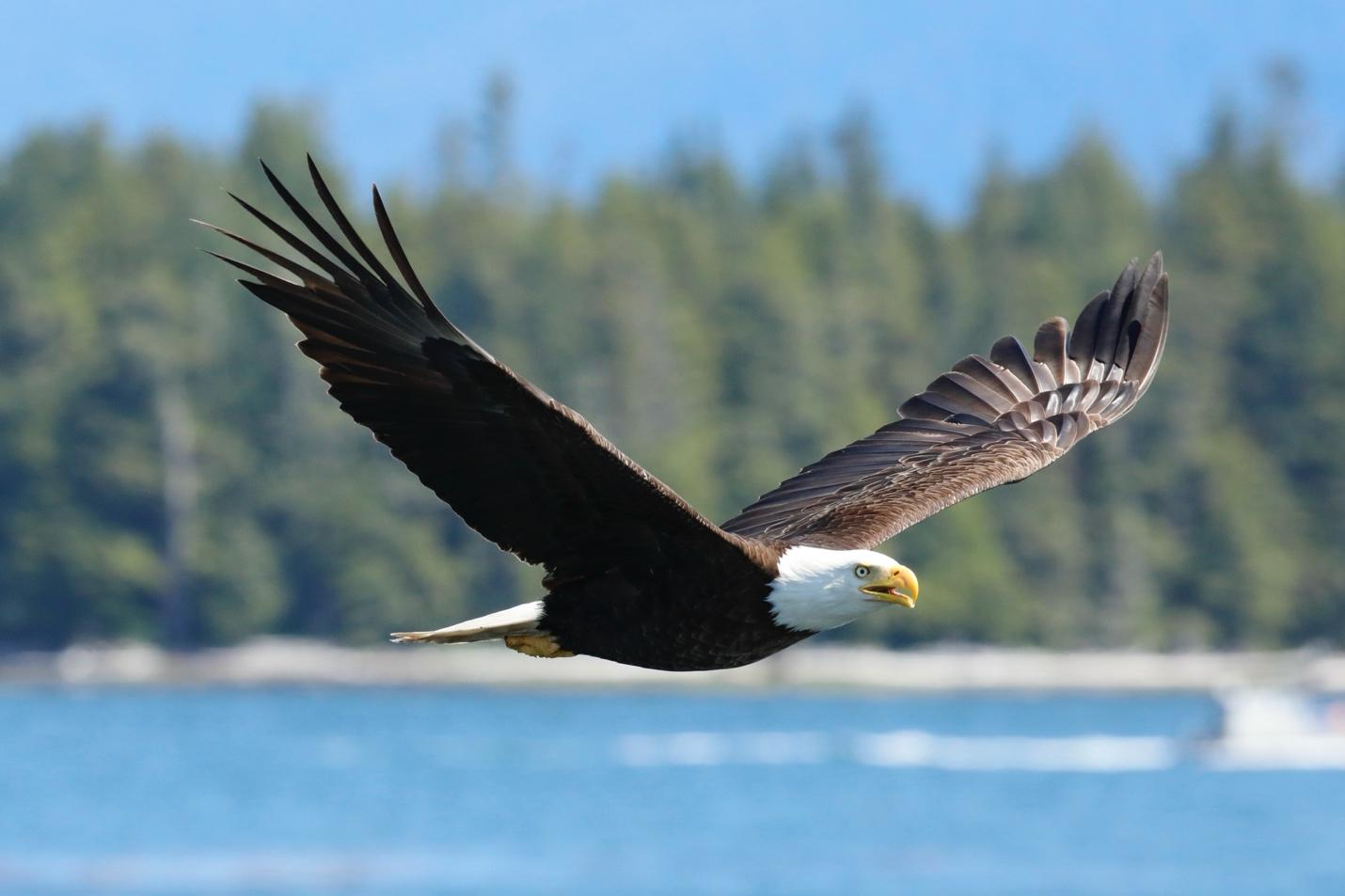
Bald Eagle, Sitka, AK, photo by Ann Carroll Burgess
Bald Eagle
Cruise passengers expect bald eagles to appear majestic. And they do. Occasionally.
More often, bald eagles behave like overconfident seagulls with better public relations.
To be fair, they are magnificent birds. Alaska hosts one of the largest populations of bald eagles on Earth, and seeing one perched atop a Sitka spruce feels undeniably patriotic—even for Canadians and Europeans who suddenly find themselves emotionally invested in American symbolism.
With wingspans reaching seven feet, bald eagles are imposing predators. They snatch fish from the water with deadly precision and possess eyesight so sharp they can spot prey from astonishing distances.
They also steal food from other birds whenever possible.
Many first-time visitors are surprised to learn that bald eagles frequently prefer piracy over hard work. Why catch your own fish when you can simply intimidate a gull into dropping lunch?
In ports such as Ketchikan, eagles are so common that locals barely notice them anymore. Cruise passengers, meanwhile, behave as though every perched eagle is a personal gift from Nature herself.
Which, honestly, it sort of is.
4. Sea Otters: Floating Marshmallows With Attitude
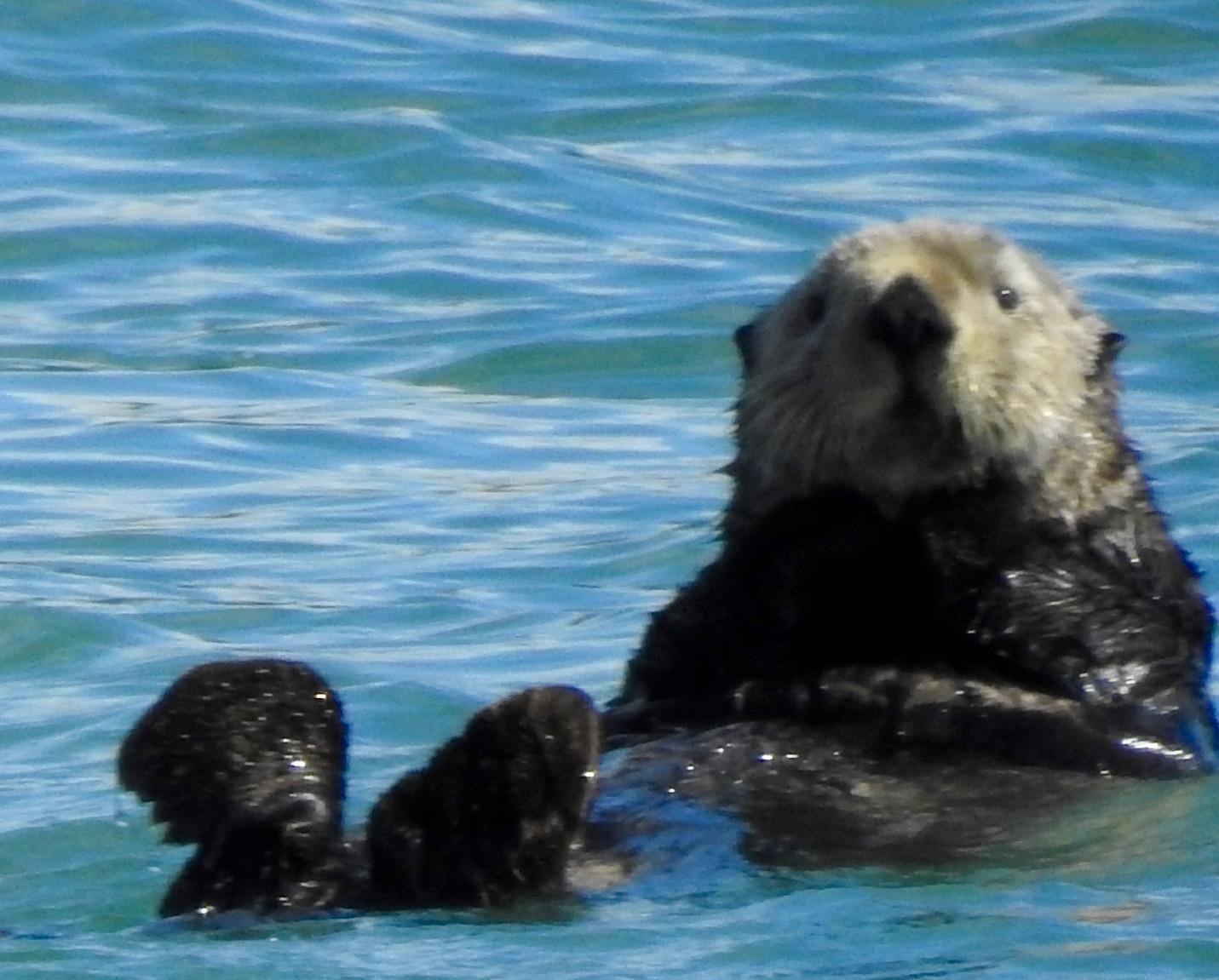
Sea Otter, Columbia Glacier,Alaska. Photo by Ann Carroll Burgess
Sea Otter
No animal in Alaska creates more synchronized human squealing than the sea otter.
Sea otters float on their backs wrapped in kelp like tiny fuzzy retirees enjoying a spa day. They hold paws. They juggle rocks. They nap in groups called rafts. They look permanently surprised by existence.
Passengers absolutely lose their minds over them.
Part of the appeal is that sea otters appear almost cartoonishly adorable. Another part is that they survive in brutally cold Pacific waters while somehow maintaining the energy of caffeinated toddlers.
Sea otters possess the densest fur of any mammal on Earth—up to a million hairs per square inch. Unlike seals or whales, they lack insulating blubber, so their luxurious fur acts as their survival suit.
Unfortunately for marine ecosystems, sea urchins view kelp forests as an all-you-can-eat buffet. Sea otters help keep urchin populations under control, making them critical ecological guardians of Alaska’s coastal waters.
In other words, beneath the adorable exterior lies a ruthless shellfish assassin.
Nature is complicated.
5. Moose: Alaska’s Unexpected Traffic Hazard
Moose photo courtesy of Science Photo Library
Moose
Many cruise passengers assume moose are simply oversized deer.
This misconception usually lasts until they see one.
A full-grown bull moose can stand over six feet tall at the shoulder and weigh upwards of 1,500 pounds. Encountering one unexpectedly is rather like discovering that a horse has somehow evolved antlers and anger issues.
Moose are astonishingly common in Alaska, yet they retain an almost mythical quality. Partly this is due to their sheer size. Partly it is because they move through forests with eerie silence despite being approximately the dimensions of a garden shed.
Bull moose in autumn carry enormous antlers that resemble mobile chandeliers. During the rutting season, they become aggressively determined romantics, which rarely ends well for nearby shrubs.
Cruise visitors often expect moose to appear majestically beside pristine lakes at sunset. In reality, moose are just as likely to wander through parking lots, block highways, or chew landscaping outside hotels in Anchorage.
Alaskans treat them with cautious respect. Tourists treat them like Disney characters. The moose generally disagrees with the second interpretation.
Honorable Mentions: The Near-Misses
Alaska’s “Big Five” may dominate the spotlight, but several other creatures frequently steal scenes along the way:
- Orca — sleek black-and-white apex predators that instantly cause binocular stampedes.
- Dall Sheep — mountain climbers that appear to defy gravity.
- Puffin — clown-faced seabirds that somehow look both elegant and deeply confused.
- Harbor Seal — the floating sausages of glacier country.
- Steller Sea Lion — enormous barking marine couch potatoes.
Final Thoughts: Why Wildlife Becomes the Heart of an Alaska Cruise
Glaciers may initially sell Alaska cruises, but wildlife often becomes the memory passengers carry home.
There is something profoundly moving about standing on an open deck beneath cold northern skies while a whale surfaces nearby or a bald eagle glides past snow-covered mountains. Alaska’s wildlife does not feel staged. It feels gloriously unscripted.
Of course, wildlife watching aboard a cruise ship also requires patience, good binoculars, warm clothing, and the willingness to rush outdoors while still holding a half-finished dessert.
But when Alaska delivers—and it usually does—the experience feels less like sightseeing and more like briefly stepping into another world.
One populated by whales, bears, otters, and the occasional moose that looks mildly offended by your existence.